

论文专题讲解:Kimi K2:MuonClip、万亿 MoE 与 Agent 数据

- 技术报告:
Kimi K2: Open Agentic Intelligence - 模型:
Kimi-K2-Base、Kimi-K2-Instruct - 链接:arXiv:2507.20534
- 模型权重:Hugging Face: moonshotai/Kimi-K2-Instruct
- 关键词:MoE、Agentic Intelligence、MuonClip、QK-Clip、MLA、synthetic data、tool use、RLVR、self-critique reward、checkpoint engine、agentic rollout
Kimi K2 这份报告的核心不是“又发布了一个大模型”,而是围绕一个更明确的目标展开:**怎样把开源模型做成强 agent,而不是只做一个静态聊天模型。**它把问题拆成两层:预训练阶段要在高质量 token 变稀缺的情况下提高 token efficiency;后训练阶段要把 base model 变成能使用工具、写代码、跑多步任务、在真实或模拟环境中学习的 agentic model。
从技术路线看,Kimi K2 有三条主线:
| 线索 | Kimi K2 的做法 | 为什么重要 |
|---|---|---|
| 大规模 MoE base model | 1.04T total params、32B activated params、384 experts、MLA、15.5T pre-training tokens | 用更高 sparsity 扩大模型容量,同时控制每 token 激活计算 |
| 稳定高效预训练 | MuonClip = Muon + weight decay + RMS matching + QK-Clip | 继承 Muon 的 token efficiency,同时压制 attention logits explosion |
| Agent 后训练 | 大规模 tool-use synthetic data、verifiable rewards、self-critique rubric reward、agentic rollout infra | 把静态 SFT 扩展到工具调用、代码环境、主观偏好和多轮交互 |
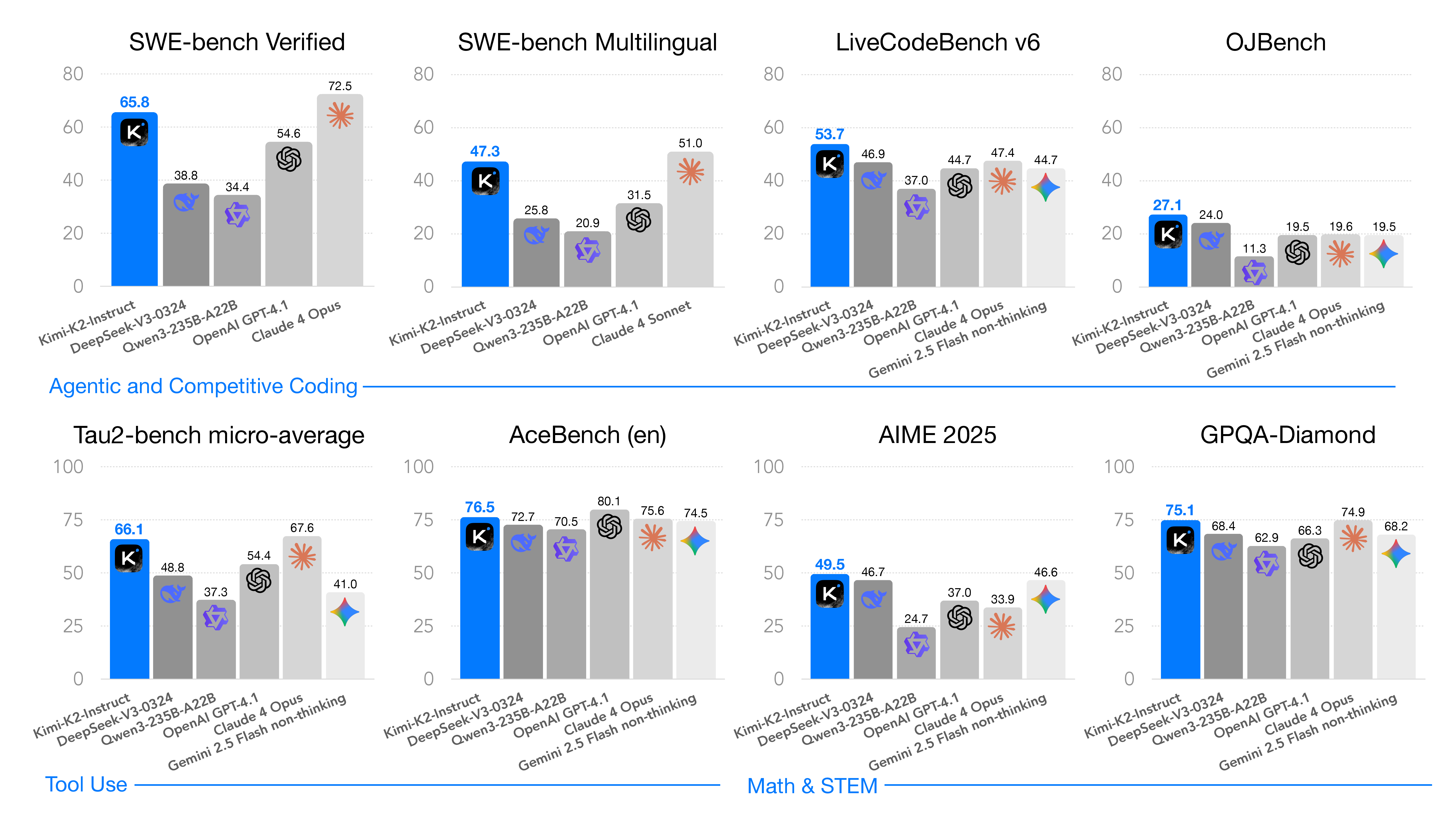
图源:Kimi K2: Open Agentic Intelligence,Figure 1,来自 arXiv source 包 figures/k2-bench-bar-chart.pdf 转 PNG。原图展示 Kimi K2 在非 thinking 设置下的主要 benchmark 结果,突出 coding、tool use、math/STEM 与 general tasks。
报告强调所有模型都在 non-thinking setting 下评测。也就是说,Kimi K2 的定位不是像 DeepSeek-R1 / Qwen3 thinking mode 那样主要靠长 CoT test-time scaling,而是希望在普通非长思考模式下具备很强的 agent、代码、工具和通用能力。
这会影响我们解读分数:SWE-bench、Tau2-Bench、ACEBench 这些任务更接近“模型是否能执行任务流程”,不是单纯知识问答。因此 Kimi K2 的亮点更偏 agentic capability,而不是只在数学榜单上卷。
论文位置
Kimi K2 可以放在 DeepSeek-V3、DeepSeek-R1、Qwen3 之后一起看:
| Report | Core emphasis | Training / post-training signal |
|---|---|---|
| DeepSeek-V3 | MoE、MLA、FP8、DualPipe、低成本大规模预训练 | 预训练和系统工程共设计 |
| DeepSeek-R1 | 可验证任务上的大规模 RLVR,推理行为自然涌现 | GRPO、rule-based reward、long CoT |
| Qwen3 | thinking / non-thinking 双模式、thinking budget、强到弱蒸馏 | 四阶段后训练、GRPO、distillation |
| Kimi K2 | open agentic intelligence,工具使用和软件工程能力 | MuonClip 预训练、大规模 agentic data synthesis、general RL |
它和 DeepSeek-R1 的区别很明显:Kimi K2 不是把主线放在长推理模型,而是放在 non-thinking agentic model。它关注的任务更多是软件工程、工具调用、多轮环境交互、复杂指令和开放偏好。换句话说,K2 的问题不是“模型能不能想很久”,而是“模型能不能在真实任务流程中行动得更稳”。
它和 DeepSeek-V3 的关系则更像工程路线的继续:架构上同样借鉴 MLA + ultra-sparse MoE,但 K2 把优化器从 AdamW / FP8 训练叙事转向 MuonClip,把后训练重点转向工具、沙箱、agentic rollout 和 self-critique reward。
模型规模与架构
Kimi K2 是一个 trillion-parameter MoE Transformer,报告中的关键规模如下:
| Item | Kimi K2 |
|---|---|
| Total Parameters | 1.04T |
| Activated Parameters | 32.6B |
| Pre-training Tokens | 15.5T |
| Context Window in Main Pre-training | 4,096 tokens |
| Long-context Activation | 400B tokens at 4K, then 60B tokens at 32K |
| Extended Context Method | YaRN to 128K |
| Attention | Multi-head Latent Attention (MLA) |
| Experts | 384 total experts, 8 active per token, 1 shared expert |
| Optimizer | MuonClip |
论文 Table 1 对 Kimi K2 和 DeepSeek-V3 做了结构对比,保留原英文列名如下:
| DeepSeek-V3 | Kimi K2 | Δ | |
|---|---|---|---|
| #Layers | 61 | 61 | = |
| Total Parameters | 671B | 1.04T | ↑ 54% |
| Activated Parameters | 37B | 32.6B | ↓ 13% |
| Experts (total) | 256 | 384 | ↑ 50% |
| Experts Active per Token | 8 | 8 | = |
| Shared Experts | 1 | 1 | = |
| Attention Heads | 128 | 64 | ↓ 50% |
| Number of Dense Layers | 3 | 1 | ↓ 67% |
| Expert Grouping | Yes | No | - |
表源:Kimi K2: Open Agentic Intelligence,Table 1。原论文表意:Kimi K2 相比 DeepSeek-V3 扩大 total parameters 和 expert 数,但降低 activated parameters、attention heads 和 dense layers。
这张表里最值得注意的是两个相反方向:K2 的 total parameters 从 671B 增到 1.04T,但 activated params 从 37B 降到 32.6B。也就是说,它不是把每个 token 的计算都做得更重,而是通过更高 sparsity 扩大可用专家容量。
MoE 的直觉是“每个 token 不必经过所有 FFN 专家”。Kimi K2 有 384 个 experts,每个 token 只激活 8 个,再加 1 个 shared expert。这样 total capacity 很大,但单 token 计算接近 32B activated params。
这种设计的代价是系统复杂度:routing、expert load balance、EP 通信、显存布局和训练稳定性都会更难。K2 报告选择更高 sparsity,本质是在“模型容量”和“系统复杂度”之间押注:如果基础设施能撑住,高 sparsity 能给同等 FLOPs 更低 loss。
Sparsity Scaling Law
Kimi K2 的模型选择来自一组 sparsity scaling law 实验。报告把 sparsity 定义为 total experts / activated experts。在固定 activated experts 为 8、shared experts 为 1 的情况下,提高 total experts 可以在固定 activated parameters / FLOPs 时降低训练和验证 loss。
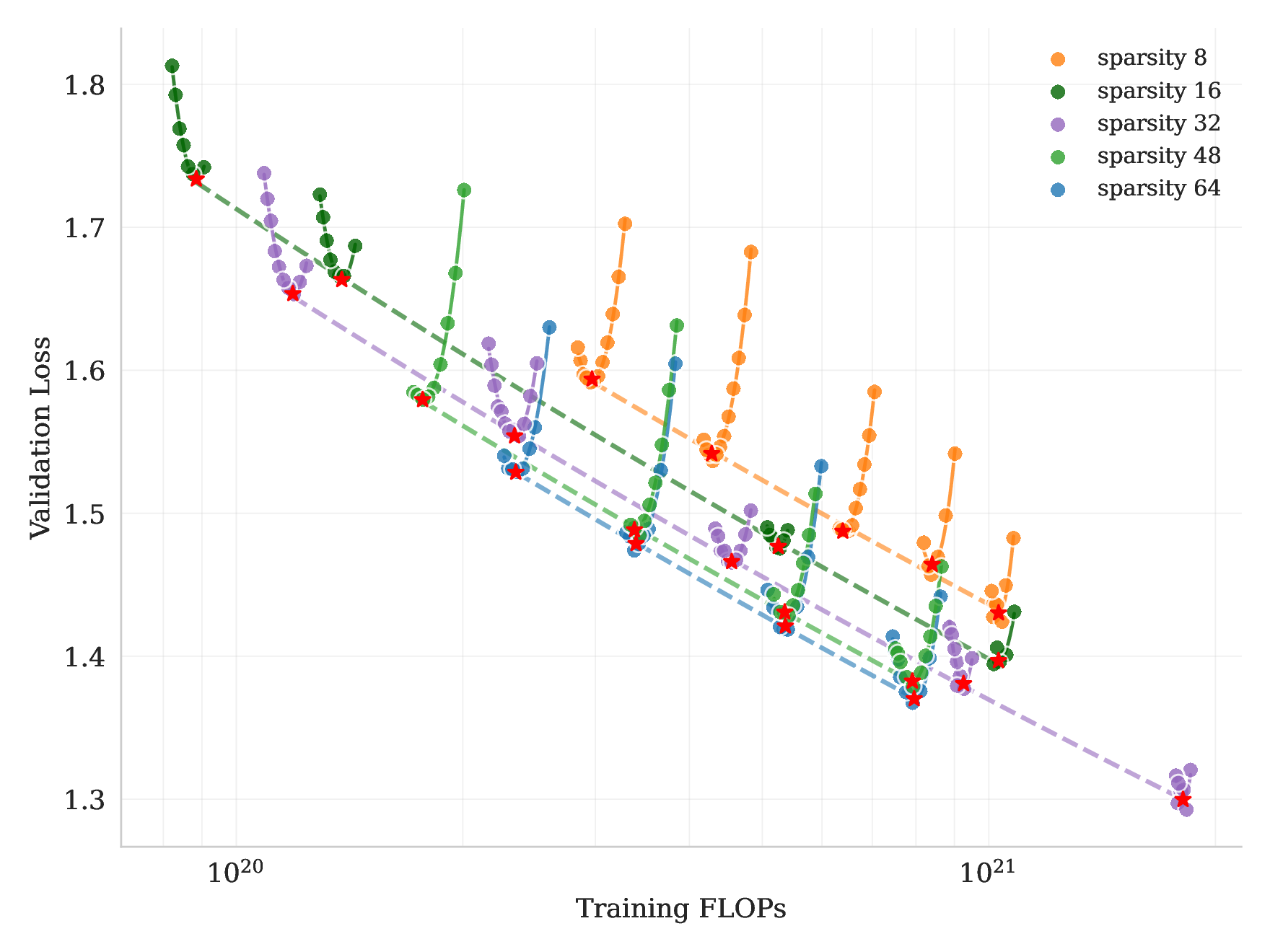
图源:Kimi K2: Open Agentic Intelligence,Figure 5,来自 arXiv source 包 figures/scaling_law_validation_loss.pdf 转 PNG。原图展示在固定 activated experts 和 shared experts 时,提高 sparsity 会降低 validation loss。
报告中一个具体结论是:在 compute-optimal sparsity scaling law 下,为达到相同 validation loss 1.5,sparsity 48 相比 sparsity 8、16、32 分别减少 1.69×、1.39×、1.15× FLOPs。Kimi K2 最终选择 sparsity 48,也就是 384 total experts / 8 active experts。
但 K2 没有盲目增加 attention heads。报告还做了 attention heads 的 scaling 对比:把 attention heads 翻倍只带来约 0.5% 到 1.2% validation loss 降低,但在 128K 序列长度下会显著增加推理 FLOPs。
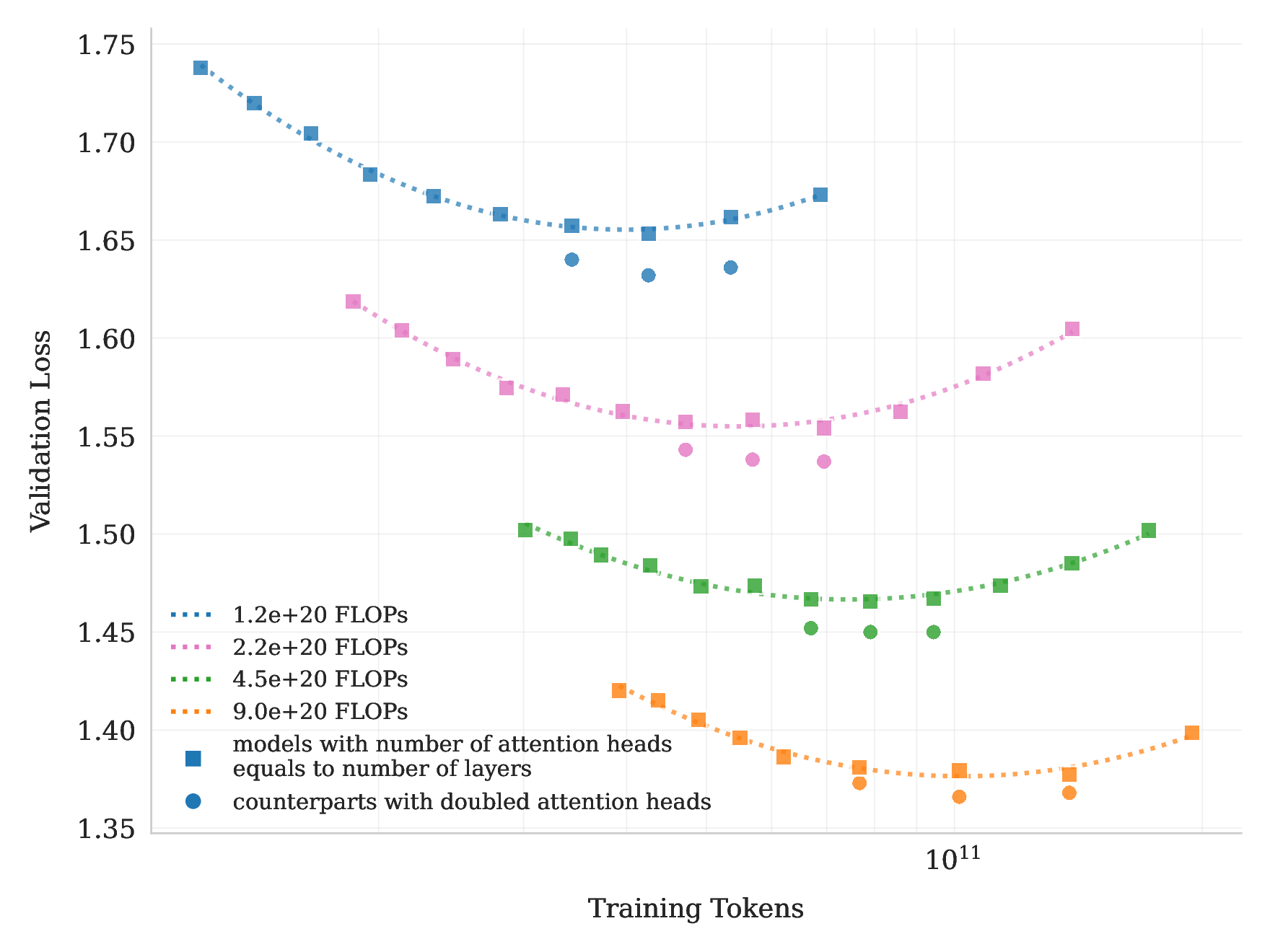
图源:Kimi K2: Open Agentic Intelligence,Figure 6,来自 arXiv source 包 figures/doubleQheads.pdf 转 PNG。原图比较 attention heads 等于 layers 与 doubled attention heads 的 scaling curves。
这里的工程判断很清楚:agentic 应用常常需要长上下文,如果 attention head 数太多,推理成本会在长序列下放大。K2 宁愿把容量放到 MoE experts 上,而不是把 attention heads 翻倍。
MuonClip:为什么 K2 不只用 AdamW
Kimi K2 的预训练优化器是 MuonClip。它的背景是:Moonshot 团队认为 Muon 在相同 compute budget、model size 和 training data 下比 AdamW 更 token-efficient,但直接把 Muon 扩到大规模 MoE 会遇到 attention logits explosion。
普通 attention logits 是:
如果 或 的谱范数持续长大, 的最大值会爆,softmax 进入极端饱和区,训练可能出现 loss spike 甚至 divergence。报告指出,logit soft-cap 是在 logits 已经算出来后截断;QK-Norm 又不适合 MLA,因为 MLA 的 Key matrices 在推理时不是完全 materialized。因此 K2 采用 QK-Clip:在参数更新后,根据每个 attention head 的最大 logit 反向缩放 query/key projection weights。
论文中的 max logit 定义为:
当某个 head 的 时,用 做 per-head 缩放。对 MLA,报告只裁剪 unshared head components:、、,不动 shared rotary ,避免一个 head 的裁剪影响其他 heads。
QK-Clip 不改变当前 step 的 forward / backward 计算,也不是直接把 softmax 输入硬截断。它是在 optimizer step 之后,借助当前 batch 观测到的 max logit,缩放 的部分参数,阻止下一步继续放大。
这类设计很适合大规模训练:它不是频繁改 loss,也不是给每层都加额外 normalization,而是只在某些 head 超阈值时介入。报告附录还说 K2 中 QK-Clip 在前 70000 steps 有 12.7% heads 至少触发一次,之后所有 heads 都降到阈值以下,机制自然失活。
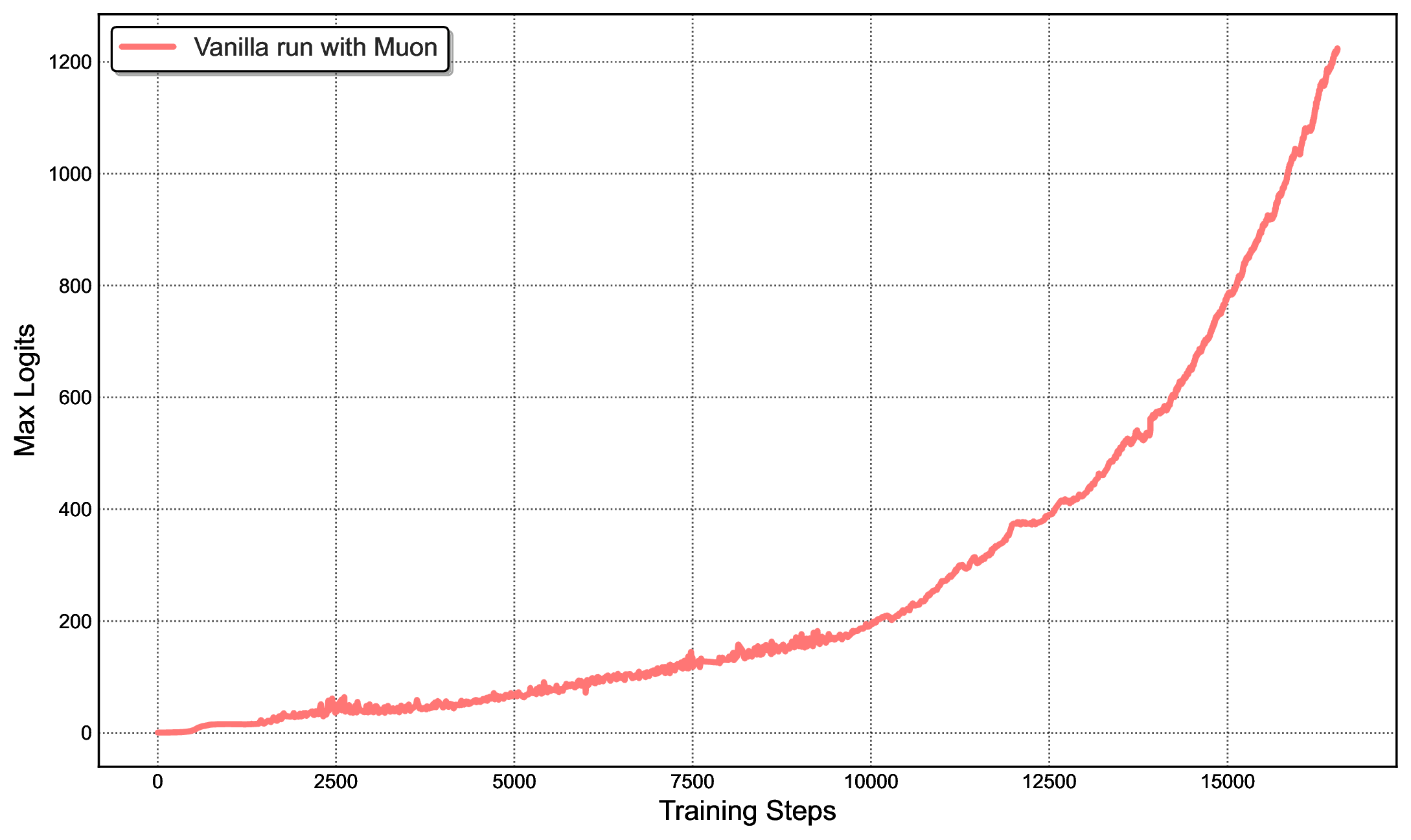
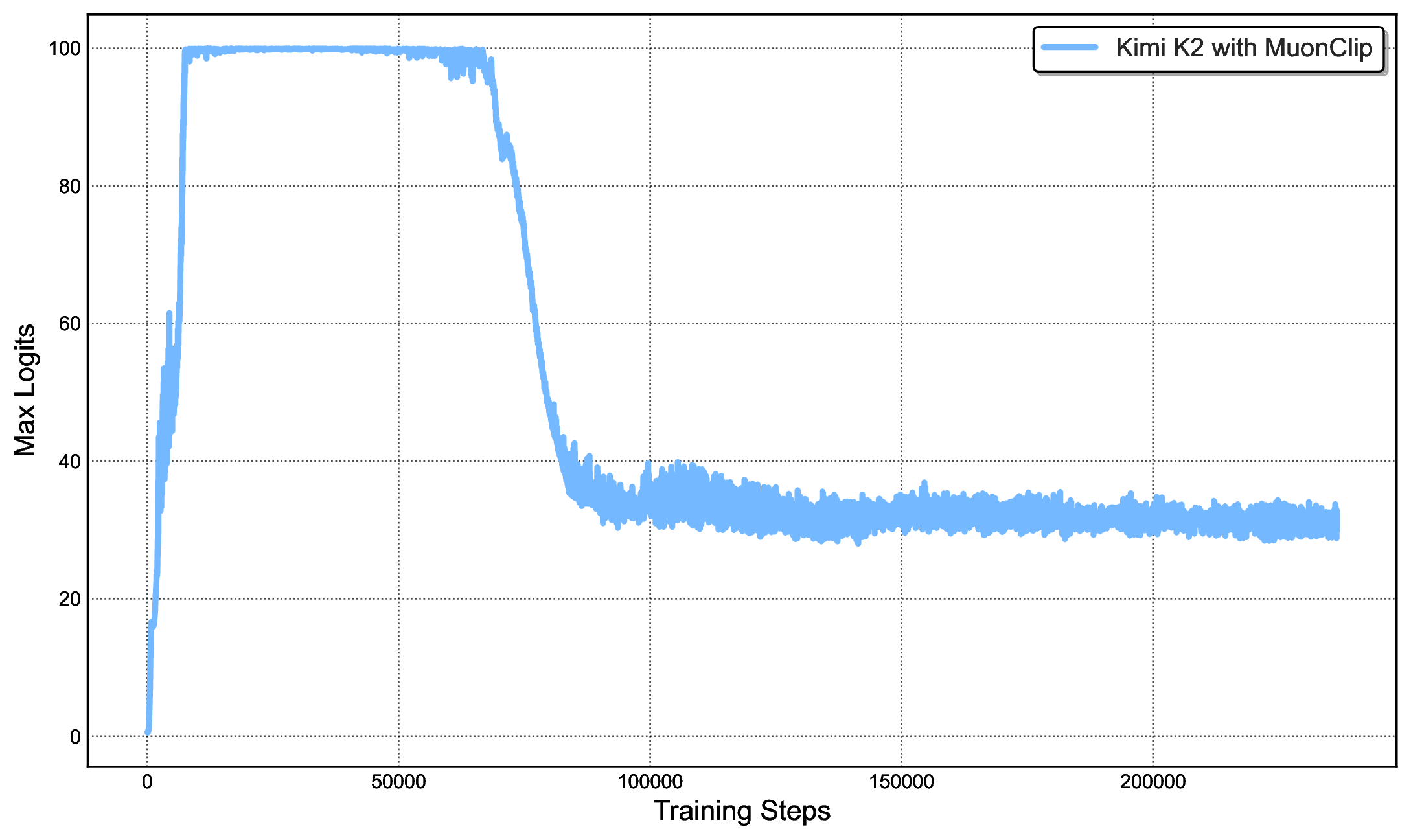
图源:Kimi K2: Open Agentic Intelligence,Figure 2 左右子图,来自 arXiv source 包 figures/muon-MN-max-logits.pdf 与 figures/muon-K2-max-logits.pdf 转 PNG。原图左侧展示 mid-scale Muon 训练中 attention logits 快速超过 1000;右侧展示 Kimi K2 使用 MuonClip 且 时 max logits 被稳定控制。
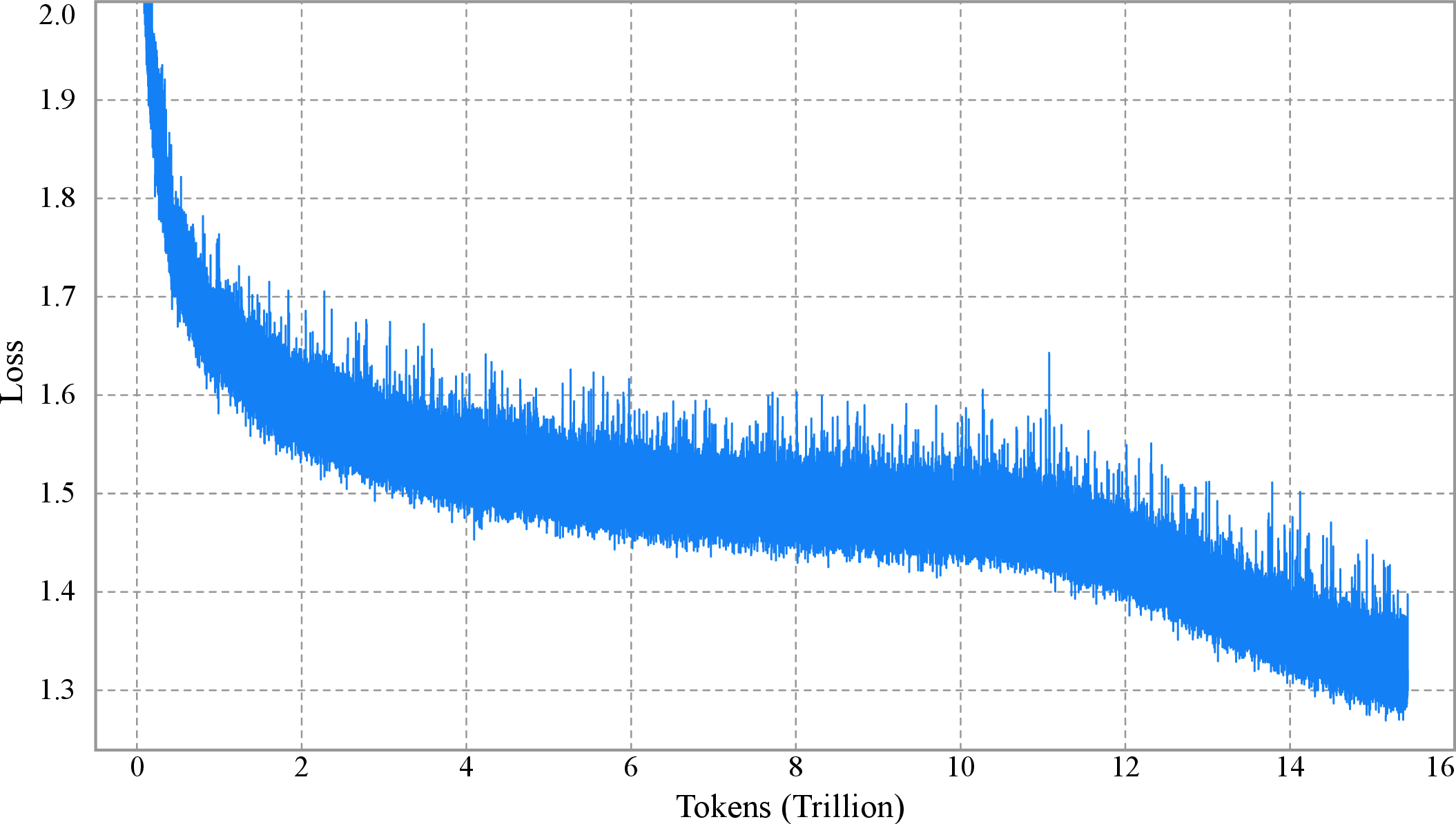
图源:Kimi K2: Open Agentic Intelligence,Figure 3,来自 arXiv source 包 figures/loss_vs_tokens_white.pdf 转 PNG。原图展示 Kimi K2 per-step training loss curve,强调未 smoothing / 未 sub-sampling,整个训练过程无 spike。
训练稳定性是这篇报告最值得认真看的部分之一。很多模型报告只给最终 benchmark,K2 把“为什么能用 Muon 训练 1T MoE 不炸”写得比较具体。它说明大模型训练的优化器选择不是简单换名字:Muon 的 token efficiency 需要 QK-Clip 这类稳定性补丁才能安全扩展到 trillion-scale MoE。
预训练数据:用 rephrasing 提高 token utility
Kimi K2 的 pre-training corpus 是 15.5T tokens,覆盖 Web Text、Code、Mathematics、Knowledge 四类主要域。报告特别强调 token utility:当高质量人类数据越来越有限时,单纯堆重复 epoch 容易过拟合,关键是让每个 token 带来更多有效学习信号。
K2 的做法是对高质量知识与数学数据进行受控 rephrasing,而不是简单重复原文。
| Data / Processing | Kimi K2 Detail |
|---|---|
| Knowledge data rephrasing | style- and perspective-diverse prompting、chunk-wise autoregressive generation、fidelity verification |
| Mathematics data rephrasing | rewrite high-quality mathematical documents into learning-note style; translate high-quality math materials into English |
| Data domains | Web Text、Code、Mathematics、Knowledge |
| Quality control | correctness / quality validation, targeted data experiments |
论文 Table 2 展示了 SimpleQA 上的对比,保留原英文列名:
| # Rephrasings | # Epochs | SimpleQA Accuracy |
|---|---|---|
| 0 (raw wiki-text) | 10 | 23.76 |
| 1 | 10 | 27.39 |
| 10 | 1 | 28.94 |
表源:Kimi K2: Open Agentic Intelligence,Table 2。原论文表意:比起直接重复原始 wiki-text,多次 rephrasing 且单 pass 训练在 SimpleQA 上更好。
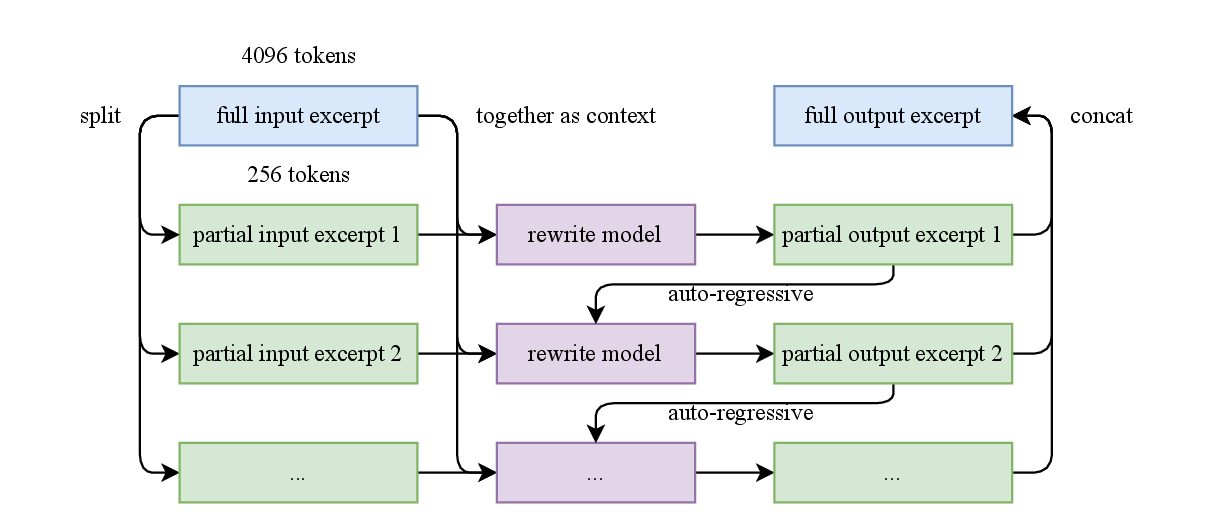
图源:Kimi K2: Open Agentic Intelligence,Figure 4,来自 arXiv source 包 figures/synthetic_data_rephrase.pdf 转 PNG。原图展示 long input excerpts 的 auto-regressive chunk-wise rephrasing pipeline。
K2 这里不是为了把文本改得“花哨”,而是为了在保持事实一致的前提下,让模型用不同表述、不同结构和不同视角重新吸收同一份高价值知识。它比重复 epoch 更不容易让模型只记住表面 token sequence。
风险也在报告里写得很清楚:synthetic rephrasing 可能带来事实漂移、幻觉、毒性和 domain generalization 问题,所以需要 fidelity verification 和按语料源控制 rephrasing 次数。K2 报告说每个 corpus 最多 rephrase 两次。
训练基础设施
Kimi K2 使用 NVIDIA H800 集群训练。每个节点有 8 张 GPU,通过 NVLink / NVSwitch 连接,跨节点使用 Gbps RoCE。
训练并行策略如下:
| Parallelism / Memory Strategy | Kimi K2 Setup | Why it matters |
|---|---|---|
| Pipeline Parallelism | 16-way PP with virtual stages | 支撑 1T MoE 参数分布 |
| Expert Parallelism | 16-way EP | 降低 EP group 开销,并适配 64 attention heads 后的较短 attention compute time |
| Data Parallelism | ZeRO-1 DP | 分摊 optimizer / gradient 状态 |
| Model-parallel group | 256 GPUs | BF16 parameters + FP32 gradient accumulation buffer 约 6TB |
| Selective recomputation | LayerNorm、SwiGLU、MLA up-projections、MoE down-projections | 降 activation memory |
| FP8 activation storage | MoE up-projection inputs and SwiGLU compressed to FP8-E4M3 in 1x128 tiles with FP32 scales | 只压存储,不做 FP8 compute |
| Activation CPU offload | remaining activations offloaded to CPU RAM | 用 copy engine 和计算 / 通信重叠 |

图源:Kimi K2: Open Agentic Intelligence,Figure 7,来自 arXiv source 包 figures/3x_stream.pdf 转 PNG。原图展示不同 PP phases 中 computation、communication 和 offloading 的 overlap。
K2 没有使用 DeepSeek-V3 的 DualPipe。报告给出的理由是 DualPipe 会让参数和梯度内存翻倍,为了补偿还要增加并行度;对超过 1T 参数的模型来说,额外成本过高。K2 选择在 interleaved 1F1B 里增加 warm-up micro-batches,用标准 pipeline schedule 尽量重叠 EP all-to-all 和计算,并把 weight-gradient computation 与 PP communication 解耦。
对 1T MoE,训练 recipe 不是“batch size + learning rate”就能复现。参数、梯度、optimizer、activation、专家通信、pipeline bubble、CPU offload 都会决定训练能不能跑。
K2 的系统选择有一个很务实的目标:使用一套一致的 parallelism configuration,让小规模和大规模实验都能复用,从而提升 research efficiency。对大模型团队来说,实验迭代速度本身就是能力的一部分。
训练 recipe
Kimi K2 的预训练 recipe 可以压缩成下面这张表:
| Setup | Value |
|---|---|
| Optimizer | MuonClip |
| Context window | 4,096 tokens |
| Total pre-training tokens | 15.5T |
| Learning rate schedule | WSD learning rate schedule |
| Warm-up | 500 steps |
| First phase | 10T tokens at constant learning rate |
| Second phase | 5.5T tokens cosine decay from to |
| Weight decay | 0.1 |
| Global batch size | 67M tokens |
| Annealing / long-context activation | 400B tokens at 4K, then 60B tokens at 32K |
| Annealing LR | to |
| 128K extension | YaRN |
这里有几个细节值得看。第一,K2 主预训练 context 是 4K,不是一开始就训 128K;长上下文是在预训练后段通过 32K activation 和 YaRN 扩展。第二,global batch size 达到 67M tokens,说明它的训练不是“很大 batch + 很短 schedule”随便组合,而是围绕 15.5T tokens 的长跑。第三,报告强调 loss curve 未 smoothing / 未 sub-sampling 且无 spike,是为了支撑 MuonClip 的稳定性主张。
后大模型训练路线图
Kimi K2 的后训练可以分成三层:
1 | Base model |
SFT 阶段,K2 使用 K1.5 和内部 domain-specialized expert models 生成候选回答,再用 LLM 或 human judges 做自动质量评估与过滤。对 agentic data,则专门构建 tool-use synthesis pipeline,让模型学习多步工具调用。
RL 阶段,K2 沿用 K1.5 的 policy optimization 目标,但扩大任务多样性与训练 FLOPs,并补充 budget control、PTX loss 和 temperature decay。更重要的是,它把 RL 从可验证任务扩展到主观偏好任务:对没有明确 verifier 的 creative writing、open-ended QA 等任务,引入 self-critique rubric reward。
Agentic Data Synthesis
Kimi K2 把工具使用数据合成写得比较完整,因为 agentic 能力很难只靠自然语料得到。报告认为真实环境信号丰富,但难以大规模构建;纯 synthetic data 可扩展但 fidelity 有风险。因此它采用 hybrid pipeline:大规模模拟 + 关键场景真实执行沙箱。
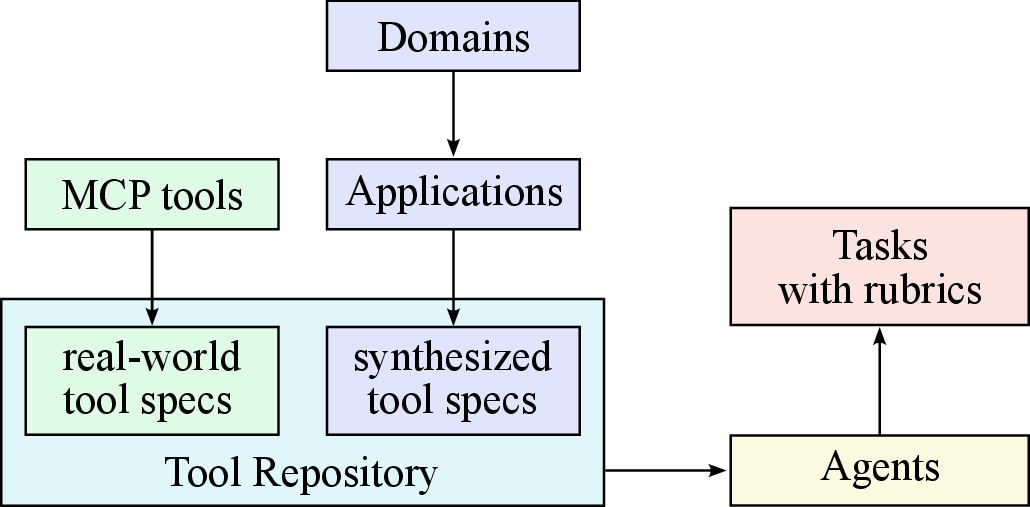
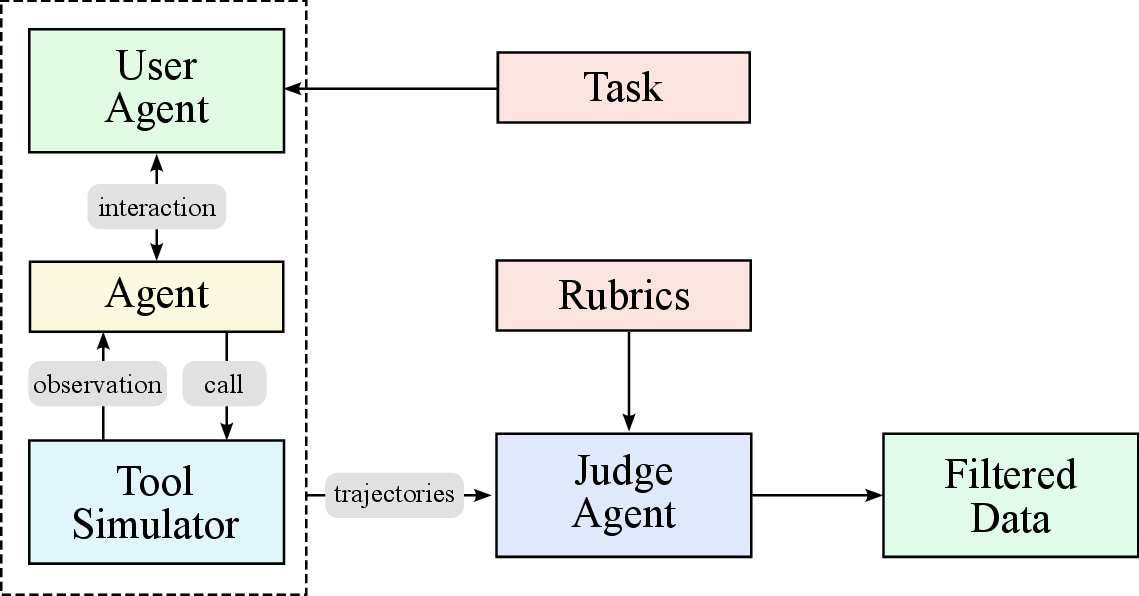
图源:Kimi K2: Open Agentic Intelligence,Figure 8 左右子图,来自 arXiv source 包 figures/tool_repo_synthesis.pdf 与 figures/tool_traj_synthesis.pdf 转 PNG。原图展示 tool specs / agents / tasks 的合成,以及 multi-agent trajectory generation 与 filtering 流程。
工具使用数据合成分三步:
| Stage | What Kimi K2 does | Output |
|---|---|---|
| Tool spec generation | construct tool specs from real-world tools and LLM-synthetic tools | tool repository |
| Agent and task generation | sample tool sets, generate agents and corresponding tasks | agent configurations + task rubrics |
| Trajectory generation | generate trajectories where agents finish tasks by invoking tools | filtered multi-turn tool-use demonstrations |
工具来源也分两类。第一类是 3000+ real MCP tools,从 GitHub repositories 抓取。第二类是 20,000+ synthetic tools,通过 hierarchical domain generation 从 financial trading、software applications、robot control 等大类扩展出具体应用域和工具接口。
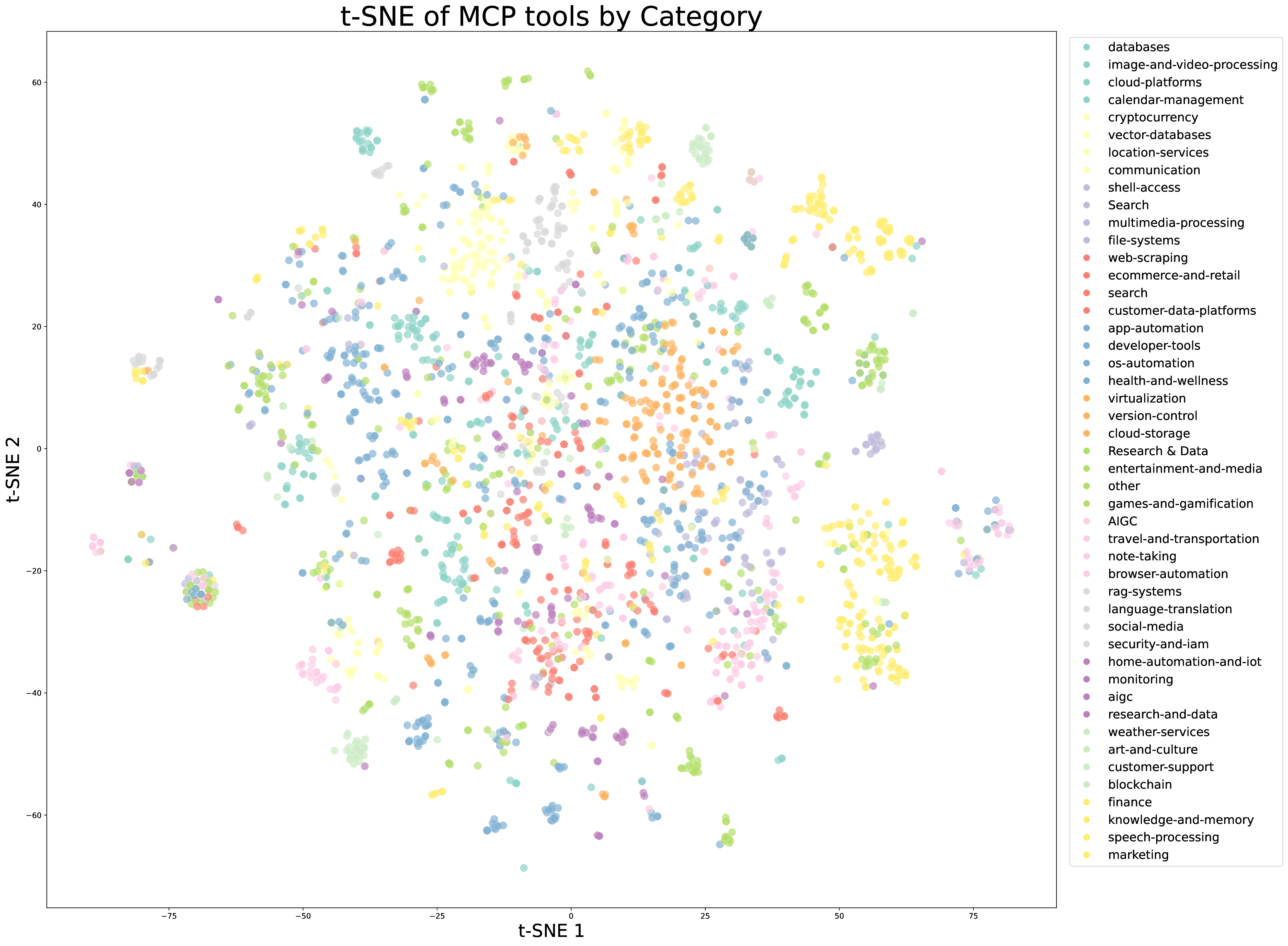
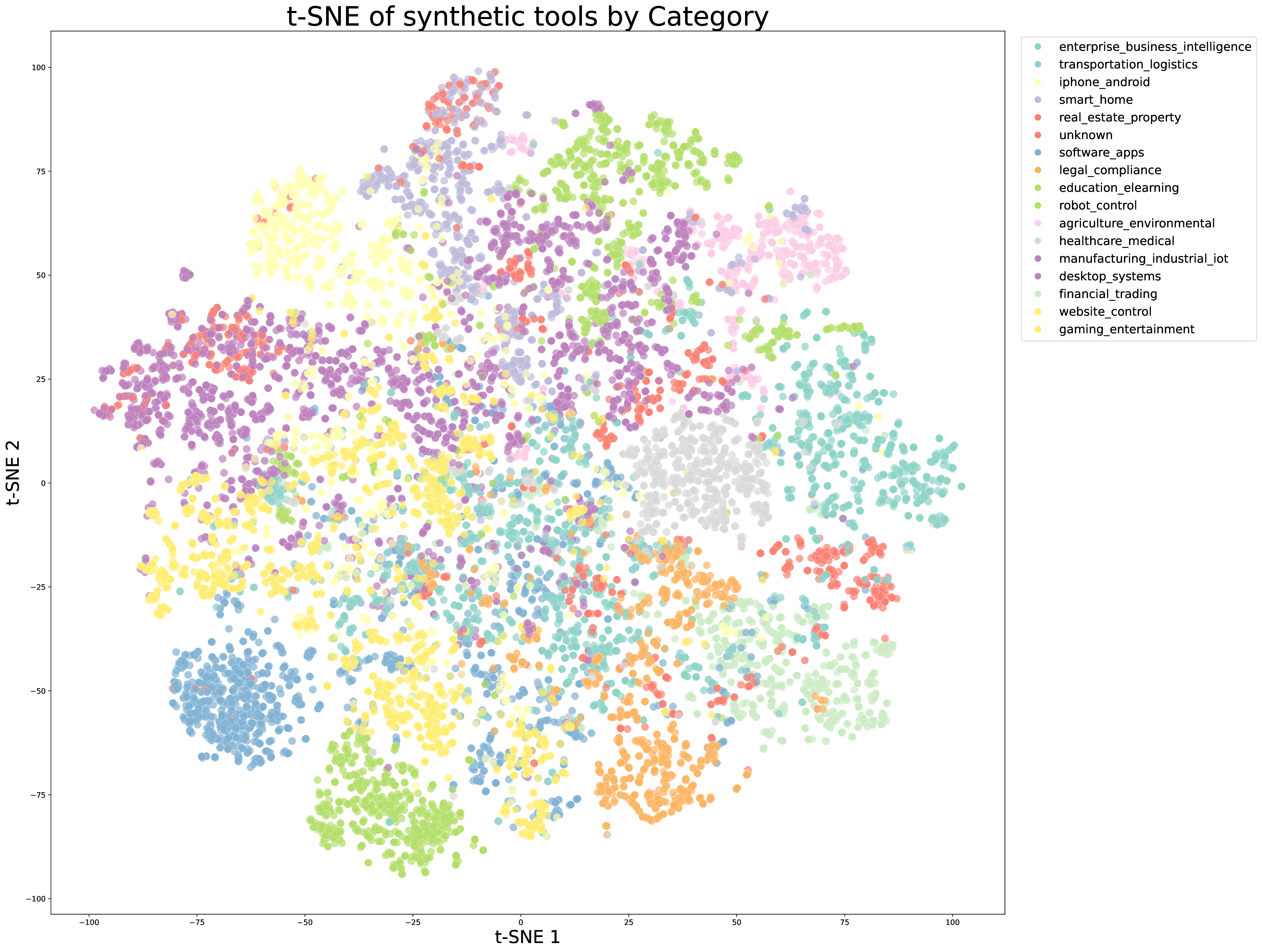
图源:Kimi K2: Open Agentic Intelligence,Figure 9 左右子图,来自 arXiv source 包 figures/tsne_tool_mcp.pdf 与 figures/tsne_tool_synthetic.pdf 转 PNG。原图用 t-SNE 可视化 real-world MCP tools 与 synthetic tools 的 embedding 分布。
报告说 tool execution environment functionally equivalent to a world model。意思是:工具调用不是无状态 API 文本补全。环境要执行 tool call,返回反馈,并在下一轮保留和更新状态。
例如一个文件系统工具调用后,文件内容真的变了;一个交易系统模拟器执行订单后,账户状态要更新;代码沙箱运行测试后,错误日志会影响下一步。这和 RL 环境很像:agent action 改变 state,environment 返回 observation / reward / feedback。
这套数据合成 pipeline 的关键是 rubric-based filtering。每个 task 都带有成功标准、预期工具使用模式和 evaluation checkpoints;LLM judge 按 rubric 过滤 trajectory。对 coding / software engineering 这类 fidelity 要求高的任务,K2 还使用真实执行 sandboxes,让代码真的跑测试,而不是只靠模拟反馈。
Reinforcement Learning
K2 的 RL 目标来自 K1.5。对每个问题 ,从旧策略 采样 个回答 ,并优化:
其中 是同一问题采样回答的平均奖励, 是稳定学习的正则项。直觉上,它仍然利用“同题多样本的相对奖励”来训练 policy,但形式不是 PPO clipping,而是把奖励优势和 policy log-ratio 正则放进平方目标里。
RL 数据覆盖几类任务:
| RL Area | Reward / verification signal |
|---|---|
| Math, STEM and Logical Tasks | verifiable answers, tagged coverage, moderate difficulty selection |
| Complex Instruction Following | hybrid rule verification, code interpreters, LLM-as-judge, hack-check layer |
| Faithfulness | sentence-level faithfulness judge as reward model |
| Coding & Software Engineering | unit tests, pull requests / issues, executable sandboxes |
| Safety | attack model, target model, judge model, binary success/failure labels |
| General open-ended tasks | self-critique rubric reward |
K2 对 RL 做了三个实用补丁:
| Technique | Purpose |
|---|---|
| Budget Control | 给不同任务设置 maximum token budget,超长回答截断并惩罚,避免非 reasoning 域无意义变长 |
| PTX Loss | 在 RL 目标中加入高质量样本的辅助 PTX loss,缓解遗忘和任务过拟合 |
| Temperature Decay | 早期高温鼓励探索,后期降低温度提高稳定性和可靠性 |
可验证任务可以用答案正确性、单元测试或规则检查做 reward;但开放问答、写作、帮助性、风格和安全很多时候没有硬 verifier。K2 的做法是让 K2 critic 按 rubrics 对 K2 actor 的多个输出做 pairwise comparison。
这个 critic 不是完全凭空来。报告说它先在 SFT 阶段用开源和内部 preference datasets 初始化,再在 RL 过程中用可验证任务的 on-policy rollouts 继续校准。这样做的目标是把 RLVR 中学到的客观信号迁移到更主观的评价任务上。
这里和 DeepSeek-R1 的差异值得强调。DeepSeek-R1 更强调 rule-based reward 在数学/代码这类可验证任务上激发 reasoning;K2 则把 RL 做成一个更宽的 agent alignment 框架:有 verifiable rewards,也有 self-critic rewards;有数学和代码,也有 tool use、faithfulness、instruction following、安全和开放偏好。
RL 基础设施
大模型 RL 的难点不只是算法,还有系统。K2 使用 hybrid colocated architecture:training engine 和 inference engine 在同一批 workers 上,当前活跃的 engine 使用 GPU,另一个释放或 offload GPU 资源。每轮 RL 先由 inference engine rollout 新数据,再让 training engine 用新数据训练,然后把更新后的参数送回 inference engine。
对 1T MoE,参数更新本身就是系统问题。报告说用 network file system 重新切分和广播参数不现实,聚合带宽需求会达到每秒数 PB。因此他们开发了 co-located distributed checkpoint engine。
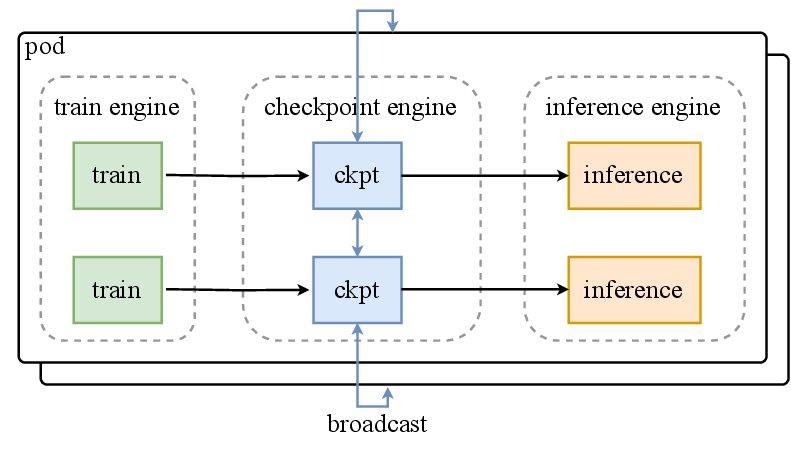
图源:Kimi K2: Open Agentic Intelligence,Figure 10,来自 arXiv source 包 figures/rl-ipc.drawio.pdf 转 PNG。原图展示 RL 参数更新中 checkpoint engine 如何在 training engine 与 inference engine 之间管理参数状态。
流程可以简化成:
1 | training engine has updated parameters |
报告中特别提到,K2 的 full parameter update 可以在 30 秒内完成,这对典型 RL iteration 来说可以忽略。这个数字很关键:如果每轮 rollout 和训练之间同步权重要等很久,RL 训练吞吐会被系统切换拖垮。
Agentic rollout 还有两个额外问题。第一,环境反馈可能很慢,例如 VM、code interpreter、外部服务调用会让 GPU 空等;K2 用 heavy environments dedicated services 和大量 concurrent rollouts 摊平等待时间。第二,trajectory 可能极长,某些任务会拖住整个 rollout;K2 使用 partial rollout,让长尾未完成任务暂停并在下一轮 RL iteration 恢复。
普通 RLHF 的 rollout 往往只是“模型生成一段文本,reward model 打分”。Agentic RL 的 rollout 可能包含几十轮工具调用、代码执行、文件修改、环境状态更新和失败重试。
这意味着训练系统要同时管理 GPU 推理、环境服务、沙箱隔离、长 trajectory、失败恢复、权重更新和数据回流。K2 报告里的 checkpoint engine、partial rollout、Gym-like interface 都是在解决这个系统层问题。
评测结果
Kimi K2 的评测分为 Kimi-K2-Instruct 和 Kimi-K2-Base。Instruct 评测强调 non-thinking setting,并覆盖 coding、tool use、math/STEM、general、long-context、factuality 等任务。
论文 Table 4 很大,下面摘取与 agentic 能力关系最强的一部分,保留原英文列名:
| Benchmark | Kimi-K2-Instruct | DeepSeek-V3-0324 | Qwen3-235B-A22B | Claude Sonnet 4 | Claude Opus 4 | GPT-4.1 | Gemini 2.5 Flash |
|---|---|---|---|---|---|---|---|
| LiveCodeBench v6 (Pass@1) | 53.7 | 46.9 | 37.0 | 48.5 | 47.4 | 44.7 | 44.7 |
| OJBench (Pass@1) | 27.1 | 24.0 | 11.3 | 15.3 | 19.6 | 19.5 | 19.5 |
| SWE-bench Verified Agentic-Single-Attempt (Pass@1) | 65.8 | 38.8 | 34.4 | 72.7* | 72.5* | 54.6 | — |
| SWE-bench Verified Agentic-Multi-Attempt (Pass@1) | 71.6 | — | — | 80.2* | 79.4* | — | — |
| SWE-bench Multilingual (Pass@1) | 47.3 | 25.8 | 20.9 | 51.0 | — | 31.5 | — |
| Tau2 retail (Avg@4) | 70.6 | 69.1 | 57.0 | 75.0 | 81.8 | 74.8 | 64.3 |
| Tau2 airline (Avg@4) | 56.5 | 39.0 | 26.5 | 55.5 | 60.0 | 54.5 | 42.5 |
| Tau2 telecom (Avg@4) | 65.8 | 32.5 | 22.1 | 45.2 | 57.0 | 38.6 | 16.9 |
| AceBench (Acc.) | 76.5 | 72.7 | 70.5 | 76.2 | 75.6 | 80.1 | 74.5 |
表源:Kimi K2: Open Agentic Intelligence,Table 4 摘录。原表说明:Bold 表示 global SOTA,underlined bold 表示 best open-source;带 * 的数据来自对应模型技术报告或博客。
Kimi-K2-Base 的结果则说明 base model 本身已经很强,而不是后训练独自撑起全部分数。论文 Table 5 摘录如下:
| Benchmark (Metric) | #Shots | Kimi-K2-Base | DeepSeek-V3-Base | Llama4-Maverick-Base | Qwen2.5-72B-Base |
|---|---|---|---|---|---|
| # Activated Params | - | 32B | 37B | 17B | 72B |
| # Total Params | - | 1043B | 671B | 400B | 72B |
| MMLU | 5-shots | 87.79 | 87.10 | 84.87 | 86.08 |
| MMLU-pro | 5-shots | 69.17 | 60.59 | 63.47 | 62.80 |
| SimpleQA | 5-shots | 35.25 | 26.49 | 23.74 | 10.31 |
| CRUXEval-I-cot | 0-shots | 74.00 | 62.75 | 67.13 | 61.12 |
| CRUXEval-O-cot | 0-shots | 83.50 | 75.25 | 75.88 | 66.13 |
| LiveCodeBench(v6) | 1-shots | 26.29 | 24.57 | 25.14 | 22.29 |
| EvalPlus | - | 80.33 | 65.61 | 65.48 | 66.04 |
| MATH | 4-shots | 70.22 | 61.70 | 63.02 | 62.68 |
| GSM8k-platinum | 8-shots | 94.21 | 93.38 | 88.83 | 92.47 |
| C-Eval | 5-shots | 92.50 | 90.04 | 80.91 | 90.86 |
| CSimpleQA | 5-shots | 77.57 | 72.13 | 53.47 | 50.53 |
表源:Kimi K2: Open Agentic Intelligence,Table 5 摘录。原表比较 Kimi-K2-Base 与 DeepSeek-V3-Base、Llama4-Maverick-Base、Qwen2.5-72B-Base。
局限和阅读边界
第一,这是一份技术报告,很多评测依赖内部 harness、内部模型、内部 judge 或成本受限的 API 评测。特别是 SWE-bench 的多尝试 agentic setting、TerminalBench in-house、PaperBench Code-Dev、long-context 和 factuality 评测,都需要按报告自述口径理解。
第二,K2 的很多能力来自数据与系统闭环,而不只是模型结构。tool-use synthetic data、真实沙箱、rubric filtering、self-critic reward、checkpoint engine、partial rollout 都是重要组成部分。只复现架构或只下载 checkpoint,不能等价复现报告中的训练过程。
第三,self-critique reward 有潜在偏差。附录也提醒,当前 rubric 可能偏好 confident and assertive responses,在需要不确定性校准和多视角表达的场景中可能过度惩罚 hedging。也就是说,自我批评式 reward 可以扩展主观任务 RL,但它不是天然可靠的人类偏好替代品。
第四,non-thinking setting 是 K2 的优势叙事,也是比较边界。把 K2 和 thinking model 对比时,要区分“模型本身回答能力”“长 CoT test-time scaling”“agentic tool execution”三个维度,否则容易把不同推理协议混在一起。
项目启发
Kimi K2 给工程项目的启发主要有五条:
- 优化器是 scaling recipe 的一部分。 MuonClip 展示了一个很现实的组合:用更 token-efficient 的优化器提高预训练效率,再用 QK-Clip 处理大规模训练中的 attention logits instability。
- MoE sparsity 要和推理场景一起选。 K2 扩大 experts、降低 attention heads,是围绕长上下文 agent 推理成本做的结构取舍。
- synthetic data 的关键是 fidelity control。 rephrasing、tool synthesis、trajectory generation 都不是“模型自己造数据就完了”,必须有 fidelity verification、rubrics、judges 或真实沙箱。
- agentic RL 首先是环境工程。 没有稳定的 sandbox、tool simulator、concurrent rollout、partial rollout 和权重同步系统,RL 算法本身很难规模化。
- self-critique reward 可以扩展 RL,但要保留偏差意识。 它适合补足无 verifier 的开放任务,但 critic 的 rubrics 会塑造模型风格和价值取向,不能当作无偏人类偏好。
一句话总结:Kimi K2 的价值不是某个单点 benchmark,而是给出了一条 open agentic model 的完整工程路线:用 MuonClip 跑稳 1T MoE 预训练,用高 sparsity 提升 token efficiency,用合成工具数据和真实环境补齐 agent 行为,再用 verifiable rewards + self-critique reward + RL 系统基础设施把模型推向多步任务执行。
延伸阅读
- DeepSeek-V3:671B MoE、MLA 与 FP8 训练:对照 K2 的 MoE / MLA / 系统训练取舍;
- DeepSeek-R1:RL 激发推理能力:理解 RLVR 和可验证奖励;
- Qwen3:Thinking 模式、36T 预训练与蒸馏:对照 thinking / non-thinking 和双模式后训练;
- 强化学习:Policy Gradient、PPO 与 GRPO:补 RL 目标和 advantage 的基础;
- 训练:训练数据系统与吞吐优化:理解 synthetic data、数据质量和训练吞吐;
- 推理:RAG、Agent 与长上下文系统:把 K2 的 agentic 能力放到应用系统里看。
参考资料
- Title: 论文专题讲解:Kimi K2:MuonClip、万亿 MoE 与 Agent 数据
- Author: Charles
- Created at : 2025-11-25 09:00:00
- Updated at : 2025-11-25 09:00:00
- Link: https://charles2530.github.io/2025/11/25/ai-files-paper-deep-dives-technical-reports-kimi-k2/
- License: This work is licensed under CC BY-NC-SA 4.0.